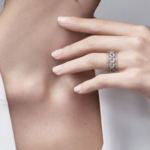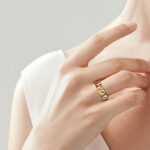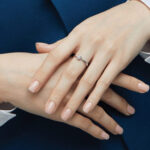


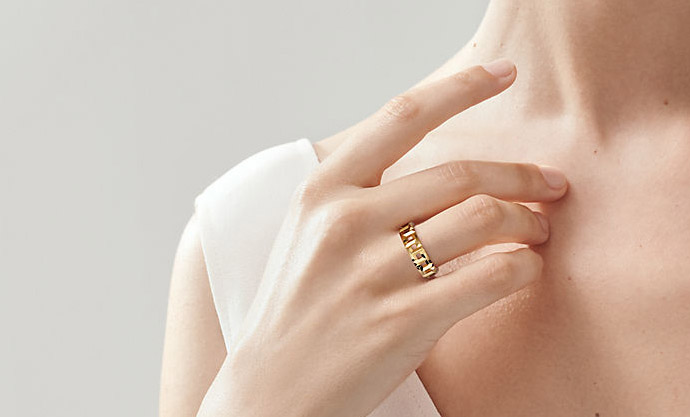
Friends who enjoy watching movies will find that many jewelry styles in classic old movies are very unique, and in fact, most of them belong to antique jewelry. Classic antique jewelry has some commonalities: precious materials, strong historical sense, and unique styles. Antique jewelry belongs to art jewelry, and most of the antique jewelry that is still in circulation today are exquisite pieces from that time, reflecting the popular trends of their era.
They are not only classic and beautiful, but also rare works of art, carrying numerous historical and cultural significance. In some ways, the artistic value of these antique jewelry collections cannot be underestimated. Today, the editor will take you to see antique jewelry with classical beauty from different periods. The jewelry styles popular during the reign of Queen Victoria of England during the Victorian era (1837-1901) were not exactly the same.
The jewelry of the early Victorian era (1837-1861) was characterized by romantic and natural elements; In the mid Victorian era (1861-1880), with the death of Prince Albert, mourning jewelry inlaid with black gemstones such as coal and jade became popular; During the late Victorian era (1880-1901), jewelry tended towards lightweight and chic styles. These antique jewelry pieces are a representation of the culture of the Victorian era, inspired by elements from ancient Assyrian, Greek, Etruscan, Roman, Egyptian, Gothic, and Renaissance periods. In this period of jewelry, opal, moonstone, Alexandrite, diamonds, and pearls were highly favored in design. In addition to improving the engraving process, manufacturers also placed special emphasis on the quality of gemstones. Rare and expensive colored diamonds set on a finely crafted platinum base are the most prominent theme of the Edwardian era.
Decorative art jewelry emerged in the 1920s and 1930s after World War I, in stark contrast to the ethereal and delicate elegance of the Art Nouveau style and the floral wreath style. The geometric patterns of decorative art jewelry are exquisite and elegant, boldly using contrasting colors – especially white (diamond) and black (striped agate), white (diamond) and blue (sapphire), or red (ruby) and green (emerald) – reflecting post-war pragmatism. At that time, the design was influenced by Mughal carved gemstones, and platinum was extremely popular during this period. Abstract patterns and smooth streamlined designs also became a fashion trend. The trend of this jewelry continued until the outbreak of World War II in 1939.
The jewelry of the late 1940s reflected the prosperity of post-war return, with design inspiration mostly derived from mechanical objects such as bicycle chains and padlocks, as well as floral and bow patterns that showcased feminine beauty. The more elaborate uses of colored gemstones were discovered during this period.